Sewer Line Repair and Replacement in Phoenix, AZ: Local Plumbers Based in 85028
A sewer line that keeps backing up usually needs a camera inspection first — the footage shows whether you need a repair or a full replacement.
See the Difference
Real results from a recent sewer line repair and replacement in phoenix, az: local plumbers based in 85028 job.
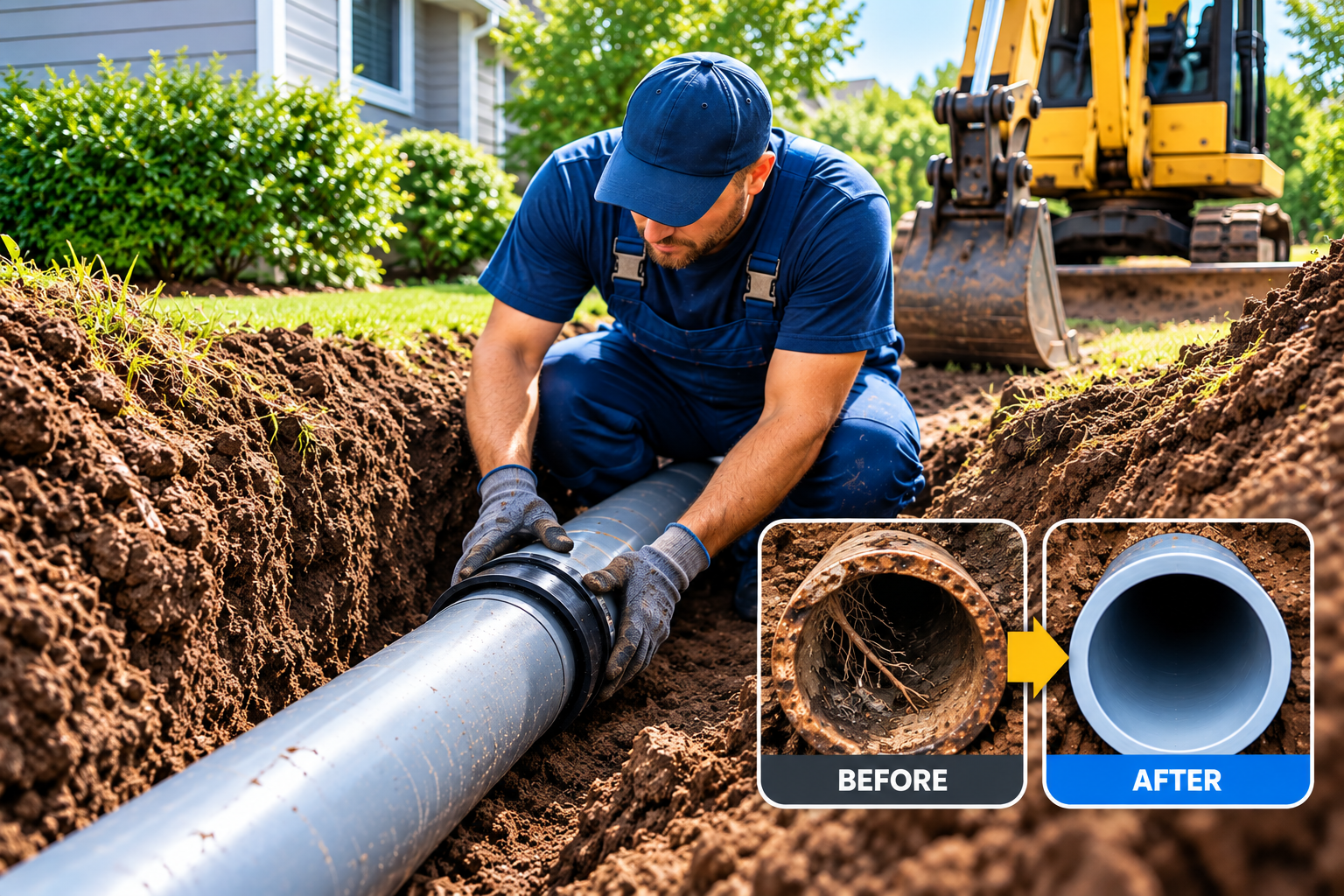
A sewer line that keeps backing up usually needs a camera inspection first. The footage shows whether one damaged section needs repair or the whole line needs replacement. Repair fits a single crack, offset joint, or root intrusion. Replacement fits pipe that is failing along most of its length. T C Gutierrez Plumbing works from 3402 E Sunnyside Dr in Phoenix and handles both. This guide explains what each option involves, why Phoenix conditions strain sewer lines, and what to do when wastewater is already backing up.
What Sewer Line Repair and Replacement Mean
Your sewer lateral is the underground pipe that carries wastewater from your home to the city sewer main. Everything you flush or drain travels through it, so a failure there affects every fixture in the house.
Repair means fixing a limited section of that pipe. Typical repairs address a cracked segment, a separated joint, or a spot where roots have pushed in. Replacement means installing new pipe along the full run, or most of it.
Picture a homeowner near Shea Boulevard who notices the shower gurgling whenever the washing machine drains. A single slow drain points to a local clog. Gurgling and slow drainage across several fixtures at once points to the main line, and that is when a sewer inspection makes sense.
Why Phoenix Sewer Lines Fail
Several local conditions put stress on buried pipe.
Tree roots. Roots grow toward moisture, and a sewer pipe is a steady water source in a dry desert yard. Roots enter through hairline cracks and loose joints, then thicken until they block flow. Fast-growing landscape trees such as ficus are commonly cited for aggressive roots.
Caliche. Caliche is a hard layer of soil cemented by calcium carbonate, common across the Sonoran Desert. It does not drain like loose soil, and it makes trenching slower and harder. That affects how a replacement is planned.
Monsoon season. The National Weather Service defines Phoenix’s monsoon season as June 15 through September 30. Heavy rain can saturate and shift the soil around buried pipes, which can open joints that were already weak.
Aging pipe materials. Older Phoenix homes may have vitrified clay, cast iron, or Orangeburg pipe. Orangeburg is a pipe made of layered wood pulp and tar, and it can deform or collapse over time. Cast iron corrodes from the inside and develops rough scale that catches debris.
Consider a homeowner in an older north Phoenix neighborhood whose line has backed up twice in one summer. If the camera shows a soft, oval-shaped pipe, the material itself is failing and a spot repair will not hold.
Sewer Line Repair and Replacement Options
Camera Inspection
A plumber feeds a waterproof camera into the line through a cleanout, an access point on the sewer pipe. The footage shows cracks, roots, sags, and collapsed sections, and it usually shows how far along the line the damage runs. Every repair or replacement decision starts here.
Spot Repair
A spot repair replaces only the damaged section. The plumber digs down to the pipe, cuts out the bad segment, and installs new pipe. It works when the rest of the line is sound.
Trenchless Methods
Trenchless work avoids digging up the full length of the yard. Two common types are:
- Pipe lining: a resin-coated liner is inserted into the existing pipe and cured to form a new pipe inside the old one.
- Pipe bursting: a tool pulls new pipe through the old line while breaking the old pipe apart underground.
Trenchless options depend on the pipe’s condition and layout, so the camera inspection determines whether they are possible.
Full Replacement
Full replacement installs new pipe along the entire run, usually by open trench. It fits lines with widespread cracking, collapse, repeated blockages, or materials such as Orangeburg that are near the end of their life.
How to Decide Between Repair and Replacement
Ask these questions after the inspection:
- Is the damage limited to one section, or does it repeat along the line?
- What is the pipe made of, and how old is it?
- Are roots the only problem, or is the pipe itself deteriorating?
- Is the line accessible for a trenchless method, or do bends and collapses rule it out?
If the damage is isolated and the pipe is otherwise sound, repair usually makes sense. If the camera shows problems in several places, replacing the line typically avoids paying for one repair after another.
Digging brings its own requirements. Arizona 811, also called Arizona Blue Stake, marks underground utilities before excavation, and Arizona requires a request at least two full working days before digging. Confirm permit requirements with the City of Phoenix before any sewer work begins, since your plumber will need the correct permits in place.
What to Do During a Sewer Backup
Wastewater coming up through a floor drain, tub, or toilet calls for quick action.
- Stop using water in the house, including sinks, showers, and washing machines.
- Skip chemical drain cleaners, which do not clear a main line blockage and can harm pipes and anyone handling the drain afterward.
- Keep children and pets away from standing wastewater.
- Call a licensed plumber to locate the blockage.
Call T C Gutierrez Plumbing at (602) 878-3690 or contact us online to schedule an inspection or request emergency service.
Frequently Asked Questions
How do I know whether I need sewer line repair or replacement?
A camera inspection is the only reliable way to tell. It shows the type, location, and extent of the damage. Isolated damage points to repair, and widespread damage or failing pipe material points to replacement.
Can tree roots ruin a sewer line?
Yes, roots can crack pipe and block flow if they keep growing through joints and openings. Clearing the roots without fixing the entry point often leads to the same blockage returning. The inspection shows whether the pipe can be repaired or needs replacing.
Is trenchless repair always possible?
No, trenchless repair depends on the pipe's condition and layout. A badly collapsed section or a line with sharp offsets may need excavation. Your plumber can confirm after reviewing the camera footage.
Do I need a permit for sewer line work?
Sewer work in Phoenix commonly requires a permit, but you should confirm with the City of Phoenix for your specific job. A licensed plumber can usually pull the permit as part of the project.
Related Services
Drain Cleaning in Phoenix, AZ from a Northeast Phoenix Plumbing Shop
Drain cleaning clears blockages and built-up residue from your home's drain pipes so water flows freely again.
Leak Detection
Fast, accurate diagnosis of hidden and visible leaks before they cause costly damage.
Slab Leak Repair
Specialized detection and repair of leaks in water lines running beneath your home's concrete slab.
Need Sewer Line Repair and Replacement in Phoenix, AZ: Local Plumbers Based in 85028 in Phoenix, AZ?
TC Gutierrez Plumbing is licensed, bonded, and insured, serving Phoenix, Scottsdale, Tempe, Mesa, Chandler, Gilbert, Paradise Valley, Ahwatukee, Glendale, and Peoria. Reach out for a free estimate or same-day help.