Tankless Water Heater Installation in Phoenix, AZ from a Northeast Phoenix Plumbing Shop
Tankless water heater installation replaces a storage tank with a wall-mounted unit that heats water only when you open a hot tap.
See Our Work
Our team on the job — real tankless water heater installation in phoenix, az from a northeast phoenix plumbing shop work in the Phoenix Valley.
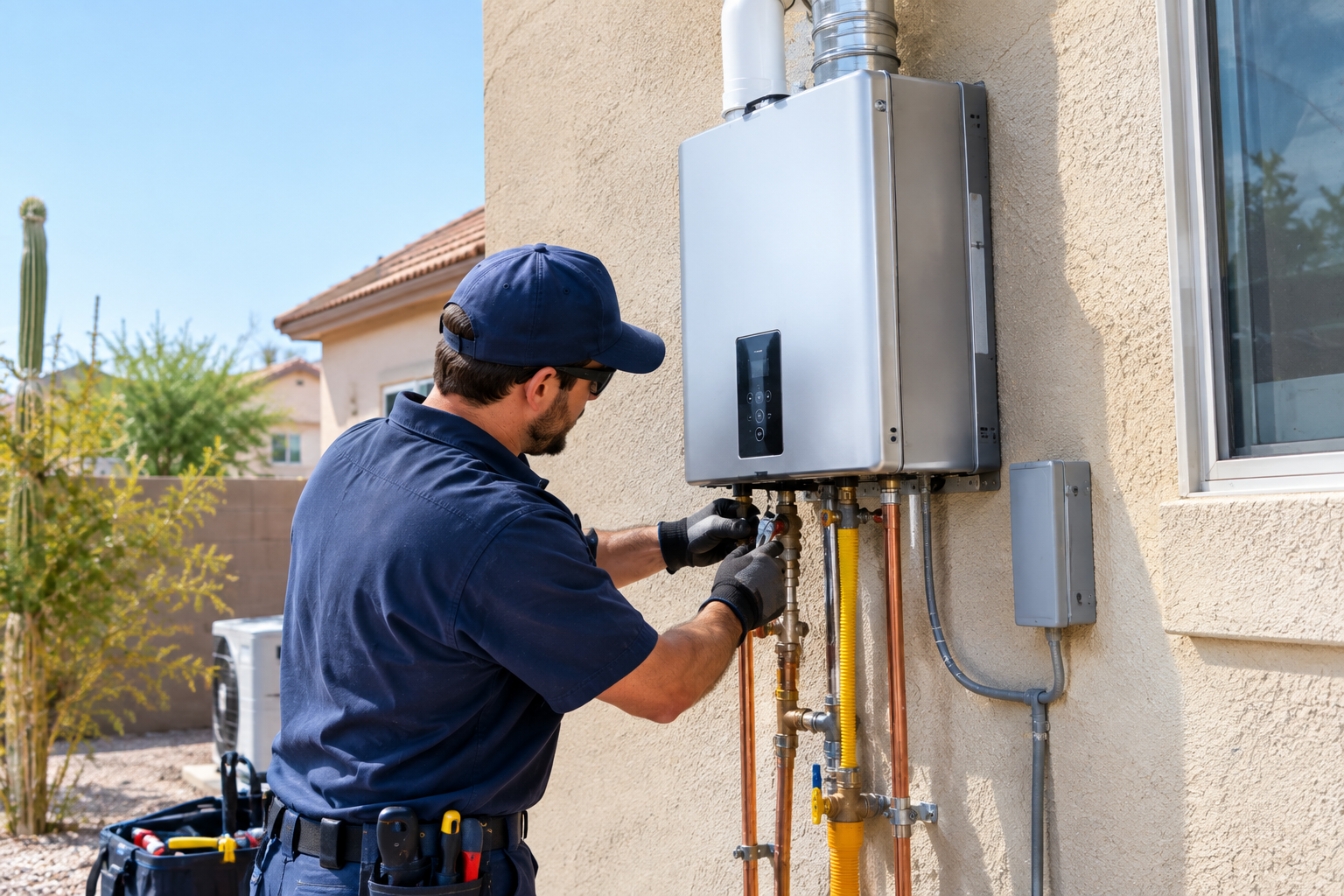
Tankless water heater installation replaces a storage tank with a wall-mounted unit that heats water only when you open a hot tap. T C Gutierrez Plumbing installs gas and electric tankless units for Phoenix homes from our shop at 3402 E Sunnyside Dr. The work involves more than swapping one heater for another. Gas line capacity, venting, electrical load, and hard water all affect whether a tankless unit performs well in your house. This guide explains how the installation works, what Phoenix conditions change, and how to decide if tankless fits your home.
What Tankless Water Heater Installation Involves
A tankless water heater, also called an on-demand heater, heats water as it flows through the unit instead of storing it in a tank. A tank heater keeps dozens of gallons hot around the clock. A tankless unit stays idle until it senses water moving.
Installation has four main parts. The plumber removes the old heater and reconnects the hot and cold water lines. Gas units need a gas supply line sized for the heater and a vent that carries exhaust outside. Electric units need a dedicated circuit rated for the heater’s power draw. Every unit also needs a condensate drain if it is a condensing model, meaning it captures extra heat from exhaust and produces acidic water that must drain safely.
Consider a homeowner in northeast Phoenix whose 12-year-old tank heater has started to leak at the base. Replacing it with another tank is the simplest path. Replacing it with a tankless unit means the plumber first checks the gas line size, the vent route, and the wall space, since a tankless heater mounts on a wall instead of sitting on the floor.
How Phoenix Conditions Affect Tankless Installation
Several local factors shape how a tankless heater should be installed and maintained here.
Phoenix tap water is hard, meaning it carries dissolved calcium and magnesium. Heating that water leaves mineral scale, a chalky crust, on the inside of the heat exchanger. The heat exchanger is the part of the heater that transfers heat to the water. Scale narrows the passages inside it and reduces efficiency over time. Many manufacturers recommend periodic flushing with a descaling solution in hard water areas, and a water softener or scale-reduction device is a common addition.
Incoming water temperature also matters. Water arriving from the street is warmer in a Phoenix summer than in colder climates, so the heater needs to raise the temperature less. In winter the incoming water is cooler and the heater works harder. Sizing a unit for the coldest months keeps hot water steady year-round.
Many Phoenix homes are single-story, and water heaters often sit in a garage or a utility closet. A garage location can work well for a tankless unit, but it needs proper clearance and a vent path to the outdoors.
Gas, Electric, and Venting Requirements
The fuel type sets most of the installation scope.
Gas Tankless Heaters
Gas tankless units burn a large amount of fuel in a short time to heat water instantly. Many need a higher gas supply than a tank heater, so the plumber may need to upsize the gas line. Gas units also need a vent, and the vent type depends on the model. A condensing unit can use plastic venting, while a non-condensing unit typically needs metal venting rated for hotter exhaust.
Electric Tankless Heaters
Electric units skip the gas line and vent, but they draw a high amount of current. A whole-house electric tankless heater usually needs a dedicated circuit, and some homes need a panel upgrade to carry the load. An electrician may need to be involved, so confirm the scope of work before scheduling.
Permits and Code
Water heater work generally requires a permit and inspection. Confirm current requirements with the City of Phoenix before the project starts. A licensed plumber can handle the permit process. Arizona plumbing contractors are licensed through the Arizona Registrar of Contractors, and you can verify a license on the agency’s website.
How to Decide If Tankless Is Right for Your Home
Start with how your household uses hot water, then check what your home can support.
- Simultaneous demand: count the fixtures that might run hot water at once, such as two showers and a dishwasher.
- Flow rate: tankless heaters are rated in gallons per minute, and the unit must match your peak demand.
- Gas or electric capacity: confirm your gas line or electrical panel can support the unit.
- Available space and vent path: confirm the wall location and exhaust route work.
- Water quality: plan for scale control if your water is hard.
Federal standards cap most new showerheads at 2.5 gallons per minute. Two showers running together would need about 5 gallons per minute from the heater, before adding a kitchen tap or appliance. Adding up your fixtures this way gives you a realistic target for unit size.
A larger household with back-to-back showers in the morning often benefits from tankless, because the unit does not run out of stored hot water. A single occupant with light use may see little benefit over an efficient tank heater.
Manufacturers commonly rate tankless heaters for around 20 years of service with proper maintenance, while tank heaters commonly last 8 to 12 years. Treat these as general ranges, since hard water and skipped maintenance shorten both.
One behavior surprises new owners. Water already sitting in the hot line cools before the heater fires, which can produce a brief burst of cold water between uses. This is sometimes called the cold water sandwich. A recirculation pump or a heater with an internal buffer reduces it.
What to Do If Your Water Heater Fails or Leaks
A leaking tank heater can cause water damage quickly, so act fast.
Shut off the cold water supply valve on the pipe above the heater. Turn off the gas control valve on a gas unit, or switch off the breaker on an electric unit. Move stored items away from the area and mop standing water to protect flooring and drywall.
A tankless unit that shows an error code or delivers no hot water usually is not a leak emergency. Check the display code and confirm the gas valve is open or the breaker is on. If the unit still will not fire, call a plumber. Repeated error codes often point to scale, a venting problem, or a supply issue.
Call T C Gutierrez Plumbing at (602) 878-3690 or contact us online to schedule tankless water heater installation or report a failed heater.
Frequently Asked Questions
How long does tankless water heater installation take?
A straightforward replacement often takes most of a day. Projects that add a gas line upgrade, new venting, or an electrical circuit take longer. The plumber can give a firmer estimate after inspecting your current setup.
Do tankless water heaters work well with Phoenix hard water?
Tankless heaters work in hard water areas, but they need scale management. Mineral buildup reduces efficiency and can trigger error codes over time. Periodic flushing and a scale-reduction device protect the heat exchanger.
Do I need a permit to install a tankless water heater?
Water heater installation generally requires a permit and inspection. Confirm the current City of Phoenix requirements before work starts. A licensed plumber can pull the permit and schedule the inspection for you.
Can a tankless water heater supply multiple showers at once?
A properly sized tankless heater can supply multiple showers, but a unit that is too small will lose temperature or flow. Add up the flow rate of every fixture that could run together and choose a unit rated above that total.
How much does tankless water heater installation cost?
Cost depends on the unit, the fuel type, and how much gas, venting, or electrical work your home needs. A quote after an on-site inspection is more reliable than a general figure, because a gas line upgrade or panel change can change the total.
Related Services
Water Heater Installation and Repair in Phoenix, AZ: Local Plumbers Based in 85028
A water heater with lukewarm output or a tripped pilot can often be repaired — a tank leaking from the body cannot, and needs replacement.
Water Softener Installation
Installation and service of water softener systems to protect your plumbing from Phoenix's hard water.
Gas Line Services
Installation, repair, and leak detection for residential and commercial natural gas lines.
Need Tankless Water Heater Installation in Phoenix, AZ from a Northeast Phoenix Plumbing Shop in Phoenix, AZ?
TC Gutierrez Plumbing is licensed, bonded, and insured, serving Phoenix, Scottsdale, Tempe, Mesa, Chandler, Gilbert, Paradise Valley, Ahwatukee, Glendale, and Peoria. Reach out for a free estimate or same-day help.